
01 · Surveillance systems
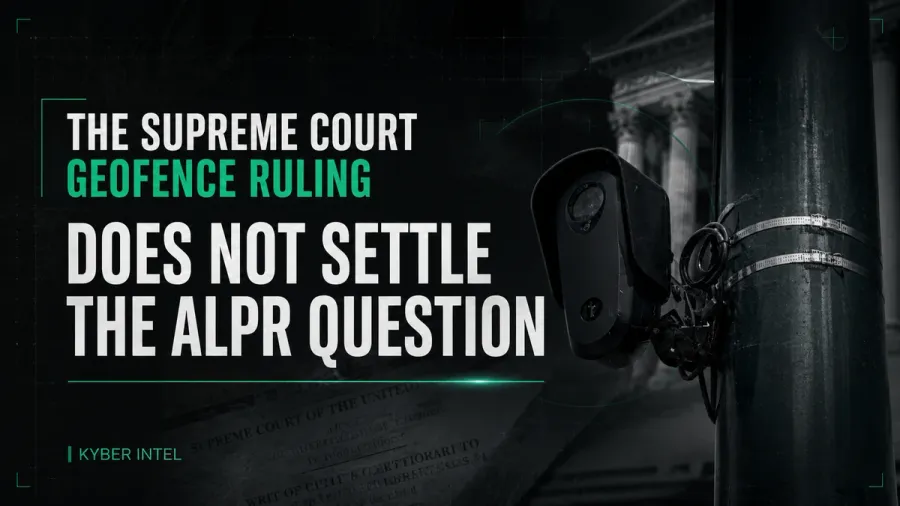
The camera is the visible part. The database is the system.
Kyber follows procurement, retention, sharing, audit controls, aggregation, and the legal authority behind networked surveillance.
About Kyber Intel
Kyber documents the systems taking control of digital life—and the practical exits that preserve privacy, autonomy, and personal liberty.
Core thesis
Convenience is often the sales pitch for control.
Accounts replace ownership. Platforms replace audiences. Cloud services replace local capability. Identity checks spread from targeted enforcement into ordinary speech and access.
Kyber explains that infrastructure accurately—and helps readers build exits before the door closes.
Inside the coverage desk
Kyber follows procurement, retention, sharing, audit controls, aggregation, and the legal authority behind networked surveillance.
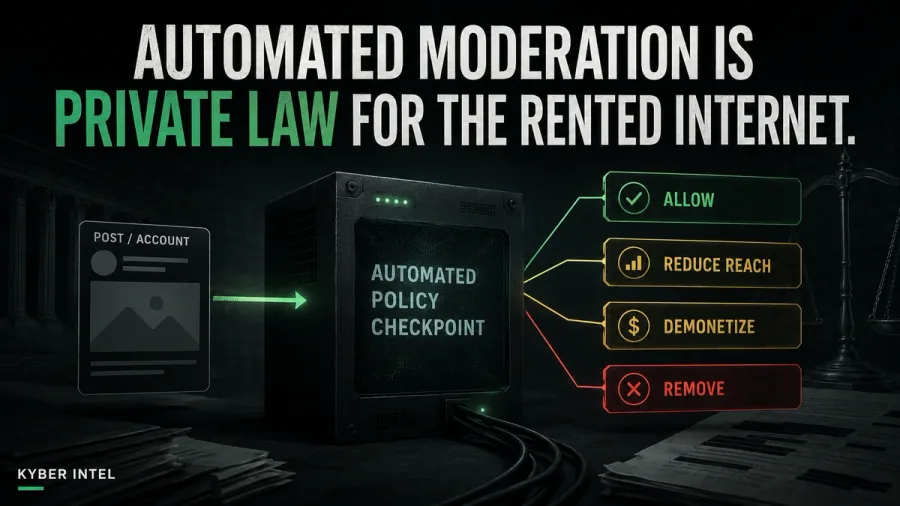
When identity, income, and audience live inside rented accounts, automated enforcement becomes infrastructure.
Claims are anchored in policy, architecture, contracts, court records, primary documentation, or reproducible testing. Missing evidence is labeled, not airbrushed.
A warning should point toward something readers can install, replace, cancel, export, self-host, harden, or challenge through lawful process.
Announcements, safety language, and institutional credentials are not proof. Incentives, architecture, and implementation matter.
No secret-knowledge performance. No conspiratorial certainty. Accuracy is more dangerous than paranoia.
Coverage
Privacy and surveillance systems
Digital identity and anonymous access
Open source and local-first technology
Platform, payment, and audience control
AI as software and control infrastructure
Financial privacy and censorship resistance
“Own your tools. Own your data. Stop renting your brain.”
KYBER INTELContact the desk
Use email for ordinary correspondence. Do not send illegal material, threats, or sensitive source information without first establishing an appropriate secure channel.
kai@kyberintel.com →